
Boiler selection
How to Calculate Steam Demand for a Factory: A Simple Guide for Boiler Sizing
Correct boiler sizing starts with the steam your factory actually needs. Too little capacity can constrain production when several processes operate together. Excess capacity can increase investment and create inefficient low-load operation. A reliable steam demand calculation gives factory owners and EPC engineers a common basis for discussing equipment, fuel and installation scope. This guide explains a practical first estimate and the information needed to turn it into an engineering proposal.
1. Identify the main sources of steam demand
Start with the process flow diagram and an equipment list. Walk through an existing plant with production and maintenance staff, or request utility requirements from equipment vendors for a new factory. Include occasional duties as well as the machines running throughout the shift.
Separate the main steam users into clear groups:
- Production equipment: dryers, evaporators, textile machines, paper machines and other process equipment supplied with steam.
- Heating duties: process-water heaters, jacketed vessels, storage tanks and steam-heated air systems.
- Sterilisation and cleaning: sterilisers, autoclaves and cleaning systems, with their required cycles and steam-quality specifications.
- Utilities: steam tracing, boiler-house steam users and distribution losses that fall within the selected calculation boundary.
2. Build a simple steam-demand worksheet
Create one row per steam user. Record its steam flow, pressure, operating period and data source. Spirax Sarco describes measurement, heat-load calculation and equipment thermal ratings as ways to estimate steam consumption. Follow these steps to organise the information:
- Step 1 — Establish each load. Use suitable steam-meter readings for an operating plant. For new equipment, request normal, maximum and startup consumption from the supplier. Label calculations and estimates clearly.
- Step 2 — Standardise units. Express flow in kg/h or t/h; 1 t/h equals 1,000 kg/h. A daily steam total is useful for energy budgeting but does not reveal the highest simultaneous flow.
- Step 3 — Add a timeline. Identify which loads operate together, how long peaks last and how often they occur. For a batch process, distinguish the heating period from the complete production cycle.
- Step 4 — Define the system boundary. Add justified distribution and auxiliary requirements not already counted. Identify steam from existing boilers or recovery sources, including when that supply is available.
- Step 5 — Prepare operating cases. Calculate normal production, credible peaks, startup and minimum demand separately. Keep approved future expansion and maintenance-cover requirements visible instead of combining them into an unexplained allowance.
Technical reference: Spirax Sarco: Methods of Estimating Steam Consumption ↗
3. Convert a heat duty into steam flow
If a supplier gives a heating duty in kW, use an energy balance to estimate the corresponding steam flow. The available enthalpy drop is the energy released per kilogram between the incoming steam and the condensate leaving the heater.
Steam flow (kg/h) = 3,600 × heat duty (kW) ÷ available enthalpy drop (kJ/kg).
For illustration, assume a 1,000 kW duty and an available enthalpy drop of 2,100 kJ/kg. The calculation is 3,600 × 1,000 ÷ 2,100 ≈ 1,714 kg/h, or 1.71 t/h. These are example assumptions, not universal design values.
Use steam tables and the actual heater conditions to establish the enthalpy drop. For dry saturated steam condensing without subcooling, this is the latent heat at the heater pressure. Include relevant equipment heat losses in the duty. Direct steam injection, evaporation and sterilisation cycles require their own process balances.
Technical reference: Spirax Sarco: Steam Consumption of Heat Exchangers ↗
4. Add simultaneous loads: an illustrative example
Suppose three production duties require 6.0, 3.0 and 1.2 t/h during the same operating interval. Their combined process demand is 10.2 t/h. If the assessment identifies a further 0.5 t/h of distribution and auxiliary demand, not already included, total demand becomes 10.7 t/h.
If an additional startup duty of 1.8 t/h genuinely overlaps that interval, the corresponding peak is 12.5 t/h. Record its duration and frequency. If startup occurs at a different time, calculate that operating case separately.
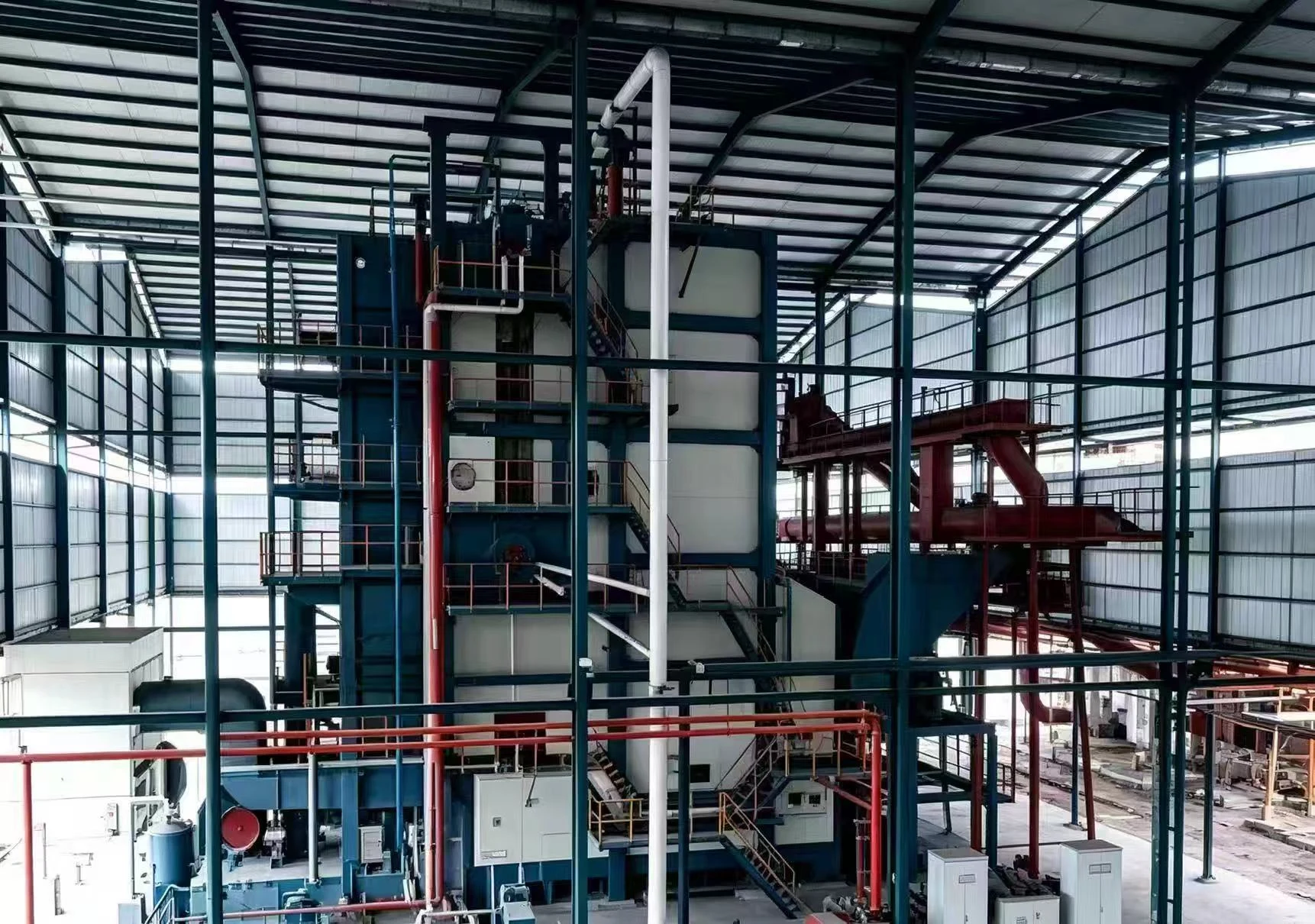
This does not automatically specify a boiler rating: operating range, fuel, pressure and reserve requirements still need review. The figures are illustrative, not Huayuan project data. For a documented application, see the Indonesia palm oil mill biomass boiler case.
5. Avoid common boiler-sizing mistakes
A useful estimate explains its assumptions. Check the following before using it to select industrial steam boiler capacity:
- Adding every equipment maximum. Confirm simultaneous operation; a sum of unrelated nameplate ratings can overstate the actual peak.
- Using daily averages for peak sizing. Dividing daily consumption by operating hours can hide short, demanding production periods.
- Confusing working pressure with design pressure. State the required pressure at the process connection, along with steam temperature and quality where relevant.
- Adding several safety margins. Identify allowances already included in vendor data before applying any project reserve or expansion allowance.
- Mixing steam demand with boiler efficiency. Efficiency is used when estimating fuel input; do not simply divide the process steam-flow requirement by an efficiency percentage.
- Ignoring low-load operation. DOE guidance explains that excessive capacity and short cycling can reduce efficiency. Ask how the proposed boiler arrangement will follow your normal and minimum loads.
Technical reference: U.S. Department of Energy: Minimize Boiler Short Cycling Losses ↗
6. Turn the estimate into a professional boiler proposal
Use the worksheet to start a discussion with an experienced boiler manufacturer and your EPC team. Share the process description, operating cases, required steam conditions, fuel analysis and site layout. For locally available biomass, compare the biomass-fired steam boiler range against the actual fuel specification and steam duty.
Review manufacturing qualifications and certificate records, and request current documents relevant to the proposed equipment. Ask the technical team to confirm the steam balance, capacity selection, auxiliary scope and acceptance conditions.
For a project-specific steam demand calculation and boiler sizing discussion, contact Huayuan’s project team. Send the information already available and mark unknown values clearly, so the final proposal is based on your factory’s operating conditions.
Explore related information
Production-line steam boiler capacity selection ↗PROJECT CONSULTATION
Discuss your factory’s steam demand
Share the details you already have. Our project enquiry form includes capacity, fuel and site-visit options.